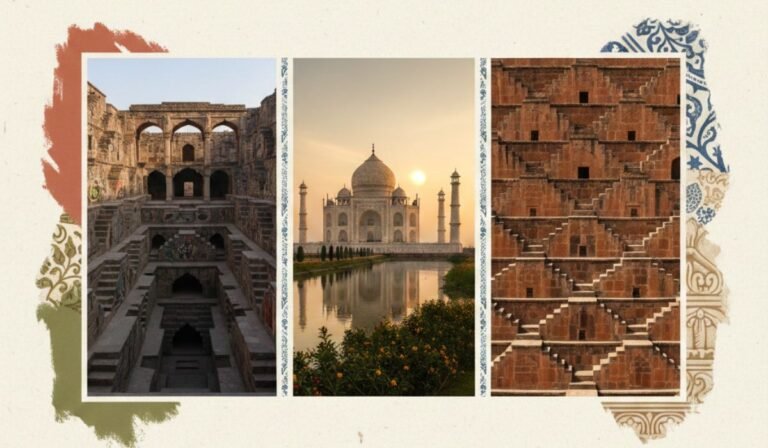
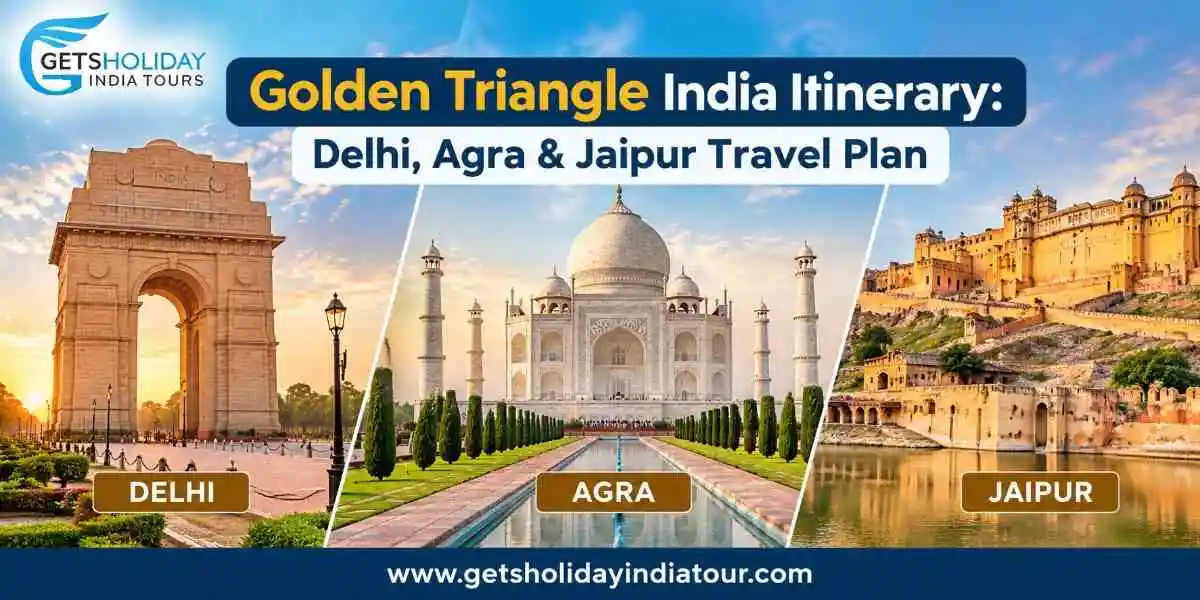
An ideal Golden Triangle India travel plan would last for about 5 to 7 days. This will start with the exploration of Delhi with its Mughal and other monuments and museums. Then it would be shifted to Agra, where Taj Mahal is located as well as numerous other monuments. The travel plan shall then include a visit of Jaipur with its many forts and palaces like Amer Fort. According to Gets Holiday India Tour, the optimum time for this journey is around 6 days.
There are not many trips that have as much history, architecture, and culture as the Golden Triangle. Delhi, Agra, and Jaipur are part of a geographical triangle in northern India. Delhi shows the glory of the Mughal Empire, and British buildings. Agra is home for the Taj Mahal, which is one of the most photographed buildings in the world. Jaipur is known as the Pink City, with forts and palaces built in the Rajput style that are still witnesses of the glory of the Indian royal period.
Particularly for first-time tourists in India, this tour gives a clear answer to the burning question: how to maximize tourism opportunities in a short period of time. This is the main reason why so many travelers look for an itinerary covering Delhi, Agra and Jaipur prior to reserving their flight tickets to India. The following guide describes a detailed daily plan for a Golden Triangle trip in India along with recommendations on scheduling, transport and priorities at each destination. No matter whether you are planning your trip on your own or collaborating with a company like Gets Holiday India Tour, this itinerary will give you a good starting point for planning your trip.
Why Is the Golden Triangle the Most Popular Tour in India?
The Golden Triangle derives its name from the triangle shape formed by Delhi, Agra, and Jaipur on a map. In fact, the three cities are located in close proximity to each other, making travel between them possible in a matter of a few hours by road or train, without the hassle of long flights.
This India Golden Triangle itinerary also works well by providing different experiences. Delhi has a political and historical significance, Agra has a unique marvel that is worth experiencing and Jaipur has abundant colors, handicraft markets, and historic buildings. Few places in the world can provide so much variety within a short distance of travel.
Golden Triangle Itinerary India – How Long It Will Take to Complete?
Most of the travelers want to know this first. The proper answer to this question depends on traveling speed and inclination towards these places, but here is a general idea of how many days one should allocate to complete the itinerary.
- 4 days: This is doable but a bit rushed, giving only the main attractions of the places you visit.
- 5 days: A popular solution where you sleep one night in Agra and one in Jaipur, and spend the rest of the time in Delhi.
- 6 to 7 days: It is advisable if you want to have a relaxed tour with a chance of doing some day trips, shopping, and resting between the traveling days.
Gets Holiday India Tour recommends 6 days for first-time visitors so that travelers can stop in Fatehpur Sikri for half a day between Agra and Jaipur without hurry.
Detailed Travel Itinerary for Delhi, Agra, and Jaipur
Day 1: Arrival and Discovering Old Delhi
Arrivals at the New Delhi International Airport are common on Day 1, therefore most of the travelers undergo some rest before proceeding to discover Old Delhi. This includes visiting some of the most notable places:
- Jama Masjid: This is known to be one of the largest mosques in India constructed by Shah Jahan, the Mughal emperor.
- Chandni Chowk: A centuries-old market where one can find spicy street food and parts packed with old history.
- Red Fort: This is a UNESCO World Heritage Site where Mughal rulers held their power.
Relaxing upon your arrival at the hotel is important so that you can adapt to your new time zone before starting your journey the next day.
Day 2: Attractions in New Delhi
Day 2 proceeds to New Delhi, examining both colonial and contemporary structures.
- India Gate: Memorial dedicated to the fallen Indian soldiers.
- Humayun’s Tomb: It is often seen as an inspiration for the Taj Mahal built nearly a century earlier.
- Qutub Minar: The highest brick minaret in history dates back to the 12th century.
- Lotus Temple: A Bahá’í temple which has a flower-like shape.
Usually, at the end of this day, an early supper is taken as one must leave for Agra the next day quite early.
Day 3: Voyage to Agra and the Taj Mahal
Agra is located at a distance of approximately 230 kilometers from Delhi, which can be reached in 3 to 4 hrs by road or about 2 hours via the Gatimaan Express, one of the fastest trains in India. The majority of Delhi-Agra-Jaipur tourist itinerary includes the trip to Taj Mahal either at sunrise or sometime later in the afternoon, in order to experience different colors of the marble and avoid crowds of tourist.
Apart from Taj Mahal, Agra has to offer:
- Agra Fort: A fort made of red sandstone and a former residence of the Mughal that can be spotted from the Taj Mahal grounds.
- Mehtab Bagh: A garden across the river that provides an alternative view of Taj Mahal, especially remarkable during sunset.
Day 4: Fatehpur Sikri and Arrival in Jaipur
The turnoff for Fatehpur Sikri might be missed by many travelers on their way to Jaipur. This once-flourishing Mughal city was established by Akbar in 1569 but was abandoned soon after due to lack of water. Today, it stands as a beautiful monument made of sandstone.
The trip to Jaipur would take about fours hours. Most travelers arrive in the evening and have the following two days to discover the marvelous pink city.
Day 5: The Forts and Palaces of Jaipur
Jaipur or the Pink City is the final stop on this Golden Triangle you have been going to. Some of the most famous sites include:
- Amber Fort: A hilltop fort known for its glass palace and stunning views, visited by elephants or jeeps.
- City Palace: A location where the royal family of Jaipur lives and is partly turned into a museum.
- Jantar Mantar: The site of an 18th-century observatory containing large stone instruments. The observatory has been included on the UNESCO Heritage List.
- Hawa Mahal: The Palace of Winds.
Day 6: Shopping, Relaxation, and Departure
The last day is typically slower than the previous one. Jaipur is famous for its textiles, ceramics, and jewels, so it is an excellent city for shopping. But travelers can take a flight from Jaipur or go back to the capital to fly internationally.
What Time of the Year is Best for a Golden Triangle Trip to India?
The timing has a greater influence on comfort than anything else on the trip. North India suffers from extreme summer heat and temperature often crosses 40°C (104°F) in Delhi and Agra between April and June. The best time for Delhi Agra Jaipur Itinerary is between October and March, when daytime temperatures are moderate and outdoor tours are enjoyable. December and January do have chilly mornings, and there might be fog, thus delays in flights in the early morning may occur.
Car, train or guided tour: How to travel the Golden Triangle?
What you choose now will determine what your entire experience is like.
- Opt for a private car if flexibility is more important to you than price: a hired car with driver will let you make stops, like Mehtab Bagh or roadside markets, which fixed train schedules do not give you a possibility to make.
- If speed and comfort matter the most for you on your Delhi to Agra Trip, trains should be your choice. Gatimaan Express is the quickest and most comfortable way to travel compared to the road.
- Probably, a guided tour is the best option for you if this is your First Trip to India when local context is meaningful. A guide will be able to show you the historical details you may miss on your own and will arrange logistics for you, such as your hotel transfers and queues for tickets.
Gets Holiday India Tour builds its Golden Triangle Tour Packages around car rentals with skilled drivers, which is the best option for those who seek flexibility without the hassle of organizing everything themselves.
Utilizing Your Golden Triangle India Trip Plan
When traveling to the Golden Triangle, it is essential to have some flexibility built into your itinerary. Visits to monuments can be time-consuming, travel between cities may be tardy, and many tourists prefer to spend some leisure time and enjoy shopping in marketplaces rather than hurrying to the next stop. However, this 6-day itinerary will allow tourists to have enough time to appreciate each city without racing through it.
If planning the Golden Triangle itinerary seems to be too complicated, one may always use the services of a travel agent like Gets Holiday India Tour. This will facilitate visiting important monuments as well as arranging all travel and accommodation. However, one way or another, the journey along the Golden Triangle route is truly memorable.
Most Common Questions
What are the costs involved in taking a Golden Triangle itinerary trip to India?
The prices vary due to the type of hotel chosen, mode of transportation used as well as the presence or absence of a tour guide.Budget travelers can follow the route on a budget, staying in cheaper hotels and using shared mode of transportation. More expensive packages including private cars and tour guides will cost more but will be worth it as well.It is best to get quotes from companies such as India Tour Gets holiday to get accurate pricing because prices fluctuate according to seasons and the size of the group.
What is the ideal number of days that one should spend in Delhi, Agra, and Jaipur?
Six days is considered to be an ideal duration for a laid-back trip with plenty of time for Fatehpur Sikri and shopping in Jaipur. Five days will be enough for visitors in a hurry while four days should be treated as the minimum.
Are solo trekkers secure in the Golden Triangle area of India?
Certainly, the Golden Triangle is one of the most tourist-friendly circuits in India because of its excellent infrastructure, clearly labeled points of interest, and plenty of travelers. Basic travel safety tips still apply, such as avoiding obscure places after dark, and using licensed transportation.
Is there any chance of changing the Golden Triangle travel path to include other areas besides Delhi, Agra, and Jaipur?
Many tourists have a habit of extending their travel itinerary in order to discover Ranthambore National Park and have a chance to see tigers or visit the cities of Udaipur and Jodhpur to explore more places of Rajasthan. The extra travel days depend on the extra destinations.
What should I bring for the Golden Triangle travel itinerary?
In most cases, lightweight, airy clothing is enough any time of the year. However, travelers are recommended to bring light jackets for the morning time from November to February. The travelers should also think about wearing comfortable shoes and dressing modestly while visiting religious sites.