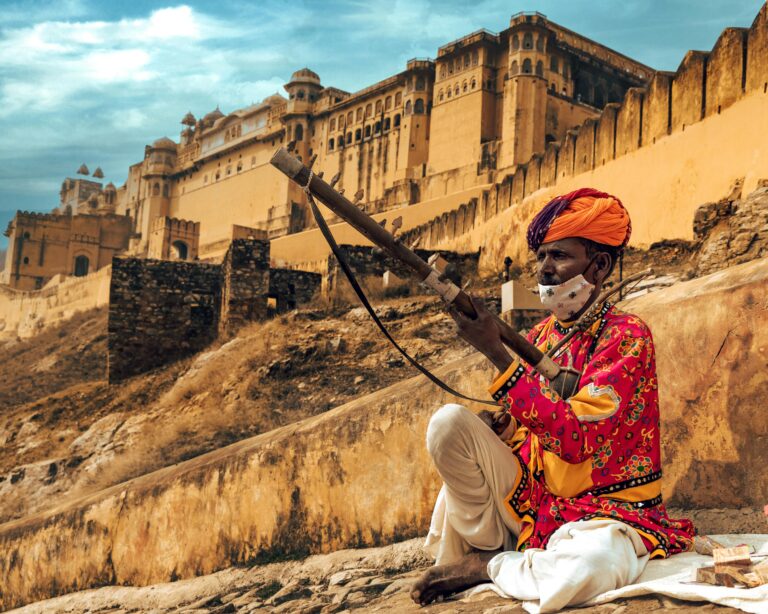

The Golden Triangle Tour India connects Delhi, Agra, and Jaipur — three cities famous for the Red Fort, the Taj Mahal, and the Amber Fort. A typical Golden Triangle tour itinerary takes 5 to 7 days, covering Mughal architecture, royal Rajasthani palaces, and vibrant local markets. Gets Holiday India Tour designs custom Delhi Agra Jaipur Tour Packages for travelers who want a well-paced introduction to India’s history and culture.
Few travel routes pack as much history, architecture, and culture into a single trip as the Golden Triangle. Named for the triangular shape formed on a map by Delhi, Agra, and Jaipur, this circuit has become the standard entry point for first-time visitors to India — and for good reason.
Each city on this route tells a different chapter of India’s story. Delhi, the capital, blends Mughal-era monuments with the pace of a modern metropolis. Agra is home to the Taj Mahal, one of the most photographed buildings on earth. Jaipur, the “Pink City,” showcases the grandeur of Rajasthan’s royal past through its forts and palaces.
This Delhi Agra Jaipur travel guide walks through what to expect in each city, how to plan a Golden Triangle tour itinerary that fits your schedule, and practical tips for making the most of your trip. Whether you’re organizing the journey yourself or working with a tour operator like Gets Holiday India Tour, this guide covers the essentials you need before you go.
Why Is the Golden Triangle India’s Most Popular Tourist Route
The Golden Triangle Tour India route earned its reputation because it delivers maximum cultural impact in minimal travel time. Delhi, Agra, and Jaipur sit within a few hours of each other by road or rail, which makes it possible to see three distinct destinations without long-haul domestic flights.
According to India’s Ministry of Tourism, Agra and Jaipur consistently rank among the most visited destinations in the country by international tourists, largely because of their UNESCO World Heritage Sites. The Taj Mahal, the Red Fort, the Qutub Minar, the Agra Fort, the Fatehpur Sikri complex, and the Jantar Mantar observatory in Jaipur are all UNESCO-listed, giving travelers access to six major heritage sites on one circuit.
Choose the Golden Triangle route if you’re visiting India for the first time and want a manageable introduction to its history, architecture, and regional diversity. Choose a longer, more spread-out itinerary if you already have a strong sense of which region interests you most — Kerala’s backwaters or Rajasthan’s desert circuit, for example.
What Should You See in Delhi, India’s Capital
Delhi serves as the natural starting point for most Golden Triangle tour itineraries, thanks to its international airport and rail connections to Agra and Jaipur.
Which historical sites define Old and New Delhi
Old Delhi reflects the city’s Mughal heritage. The Red Fort, built by Emperor Shah Jahan in 1638 as the seat of Mughal power, remains one of Delhi’s most recognizable landmarks. Nearby, Jama Masjid stands as one of India’s largest mosques, and the narrow lanes of Chandni Chowk offer a dense, sensory introduction to Delhi’s street food and textile trade.
New Delhi, designed by British architects in the early twentieth century, has a different character entirely. India Gate, the Rashtrapati Bhavan (presidential residence), and the government buildings along Rajpath reflect colonial-era planning. The Qutub Minar, a 73-meter minaret dating to 1193, is another must-see and one of Delhi’s UNESCO World Heritage Sites.
How much time should you spend in Delhi?
Two full days is generally enough to cover Delhi’s major sites without rushing. This allows one day for Old Delhi’s forts, mosques, and markets, and a second day for New Delhi’s colonial architecture and museums.
What Makes Agra a Must-Visit on the Golden Triangle Route?
Agra is the shortest stop on most Delhi Agra Jaipur Tour Itineraries, but it’s often the most anticipated.
Why is the Taj Mahal worth the visit?
The Taj Mahal, commissioned by Shah Jahan in 1632 as a mausoleum for his wife Mumtaz Mahal, took an estimated 20 years to complete. Its white marble facade changes tone throughout the day — pale pink at sunrise, bright white at midday, golden at sunset — which is why many visitors choose an early morning visit to see the monument in its softest light and avoid the midday crowds.
Book your Taj Mahal visit for sunrise if photography is a priority, since the site becomes significantly more crowded by mid-morning.
What else should you visit in Agra besides the Taj Mahal?
Agra Fort, another UNESCO World Heritage Site, sits along the Yamuna River and offers views of the Taj Mahal from its ramparts. Emperor Shah Jahan was reportedly held under house arrest here by his son, Aurangzeb, in his final years — a detail that adds historical weight to the visit.
Just outside Agra, Fatehpur Sikri is a well-preserved Mughal city built by Emperor Akbar in the 16th century. Though abandoned shortly after its construction due to water shortages, its red sandstone architecture remains remarkably intact and makes for a worthwhile half-day trip.
How Should You Plan Your Time in Jaipur, the Pink City?
Jaipur typically anchors the final leg of a Golden Triangle Delhi Agra Jaipur itinerary, and it usually warrants the most time of the three cities given its number of attractions.
What are the top attractions in Jaipur?
The Amber Fort, built in 1592, sits on a hilltop overlooking Maota Lake and combines Hindu and Mughal architectural styles. Inside the city, the City Palace remains partly occupied by Jaipur’s former royal family and houses a museum of royal artifacts and textiles.
The Hawa Mahal, or “Palace of Winds,” is one of Jaipur’s most photographed buildings, with its honeycomb facade of 953 small windows originally designed to let royal women observe street life without being seen. The Jantar Mantar, an 18th-century astronomical observatory built by Maharaja Jai Singh II, rounds out Jaipur’s UNESCO-listed sites.
Why is Jaipur called the Pink City?
Jaipur earned its nickname in 1876, when the city was painted pink to welcome the Prince of Wales — a tradition that continues today through building regulations preserving the color in the old city.
How many days should you spend in Jaipur?
Choose two to three days in Jaipur if you want time for both major monuments and its markets, which are known for block-printed textiles, blue pottery, and gemstones. Choose a single day only if your overall itinerary is tightly constrained.
What Is a Sample Golden Triangle Tour Itinerary?
A standard Golden Triangle tour itinerary spans 5 to 7 days. Here’s a typical breakdown:
- Day 1–2: Delhi — Old Delhi’s forts and markets, New Delhi’s colonial landmarks
- Day 3: Agra — Sunrise at the Taj Mahal, Agra Fort, optional Fatehpur Sikri stop
- Day 4–6: Jaipur — Amber Fort, City Palace, Hawa Mahal, local markets
- Day 7: Return to Delhi — Departure or extension to another region
Choose the 5-day version if your travel time is limited and you’re comfortable with a faster pace. Choose the 7-day version if you’d rather build in buffer time for rest, shopping, or unplanned detours — traffic between cities can add unpredictability to travel days.
What’s the Best Way to Travel Between Delhi, Agra, and Jaipur?
Road and rail are the two primary options for this route. The Gatimaan Express train covers Delhi to Agra in about 100 minutes, making it the fastest rail option between the two cities. Road travel between Delhi, Agra, and Jaipur takes longer — generally three to five hours per leg — but offers more flexibility for stops along the way.
Choose train travel if speed matters most, particularly for the Delhi-Agra leg. Choose a private car or organized tour if you’d prefer flexibility to stop at roadside attractions, control your schedule, and avoid navigating station logistics with luggage. This is one of the reasons many travelers work with a company like Gets Holiday India Tour, which arranges private transport and can adjust the pace of the itinerary as needed.
When Is the Best Time to Take a Golden Triangle Tour?
October through March is generally considered the best window for a Golden Triangle Tour India, as temperatures across Delhi, Agra, and Jaipur are milder and more comfortable for sightseeing. Summer months, from April through June, bring intense heat, particularly in Rajasthan, where temperatures can exceed 40°C (104°F). Monsoon season, from July through September, brings humidity and occasional travel disruptions.
Book your trip for the winter months if comfortable walking conditions are a priority, since most Golden Triangle attractions involve significant time outdoors. Consider the shoulder months of September or March if you’re looking for a balance between good weather and lower tourist volume.
Making the Most of Your Golden Triangle Journey
The Golden Triangle India travel guide route rewards travelers who plan for depth rather than speed. Delhi, Agra, and Jaipur each hold enough history and architectural detail to fill days on their own, so it helps to arrive with realistic expectations about pacing, weather, and travel time between cities.
For travelers who’d rather leave the logistics to specialists, Gets Holiday India Tour offers custom Delhi Agra Jaipur tour packages that account for seasonal timing, private transport, and a pace suited to each traveler’s interests — whether that means extra time photographing the Taj Mahal at sunrise or a deeper dive into Jaipur’s markets and palaces. Reach out to Gets Holiday India Tour to start planning a Golden Triangle itinerary built around your travel dates and interests.
Frequently Asked Questions
How many days do you need for the Golden Triangle tour?
Most Golden Triangle tour itineraries run 5 to 7 days, with two days in Delhi, one to two in Agra, and two to three in Jaipur.
What is the best time of year for a Golden Triangle Tour India?
October through March offers the most comfortable weather, with cooler temperatures across all three cities compared to the summer months.
Is it better to travel the Golden Triangle by train or car?
Trains, like the Gatimaan Express, are faster for the Delhi-Agra leg, while private cars offer more flexibility for stops and are often preferred for the Agra-Jaipur leg.
What are the must-see UNESCO World Heritage Sites on this route?
The Taj Mahal, Agra Fort, Fatehpur Sikri, the Qutub Minar, and the Jantar Mantar in Jaipur are the UNESCO-listed sites included on most Golden Triangle Delhi Agra Jaipur itineraries.
Is the Golden Triangle suitable for first-time visitors to India?
Yes. The route’s short travel distances and concentration of major historical sites make it a common starting point for travelers new to India.
Can Gets Holiday India Tour customize a Golden Triangle itinerary?
Yes, Gets Holiday India Tour builds custom Delhi Agra Jaipur Tour Packages based on travel dates, pace preferences, and specific interests within each city.